Ron Dearing UTC is expanding its creative subject offering with the launch of two new courses.
The UTC has introduced GCSE Graphics Communication and A-level Film Studies to its ever-evolving curriculum, offering a wider variety of subjects to students looking to pursue subjects in the arts.
The new subjects complement existing courses offered by the school and provide students with more opportunities to explore different creative pathways.
GCSE Graphics Communication
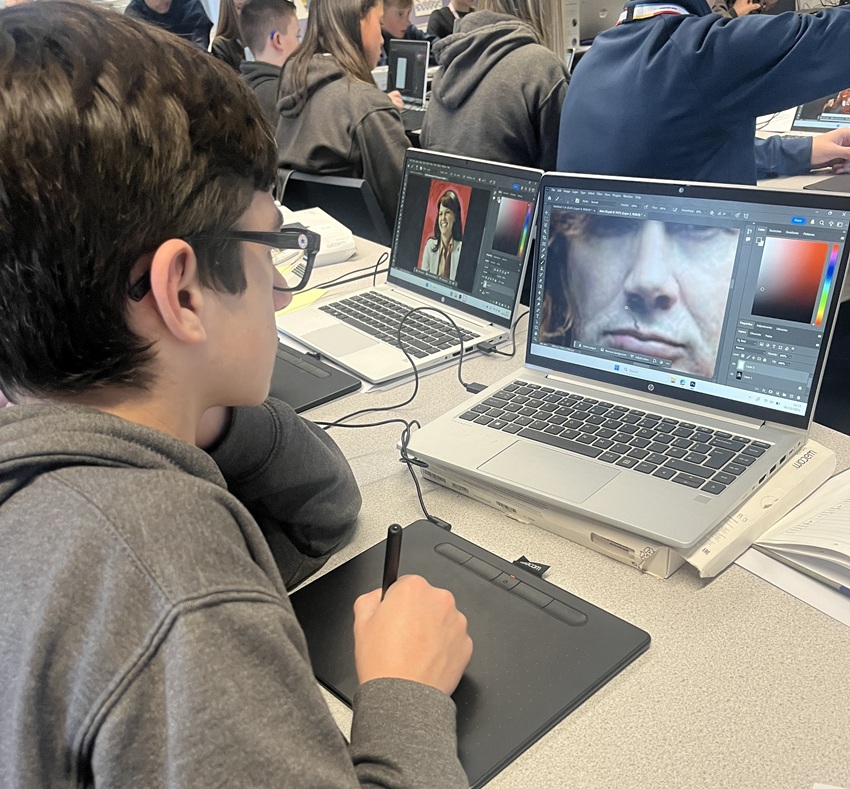
The new GCSE Graphics Communication course provides students with exposure to a range of graphic design techniques and key software used in the industry. As well as being a really exciting qualification, it is great preparation for the UTC’s A level Graphic Communication course.
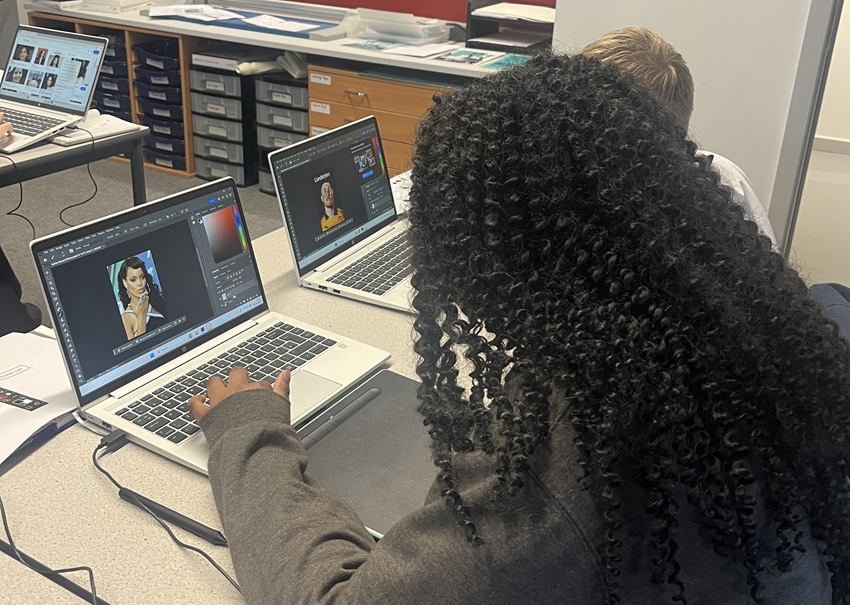
Students have kicked off the new course with an introduction to the software Adobe Illustrator, focusing on the theme of Identity to produce work in the style of visual artist Julian Opie.
In the coming months they will also learn how to use drawing tablets alongside other processes, such as screen-printing and spray painting.
Following the Identity project, students will be given a range of themes to choose from to produce a personalised project in which their outcomes could vary from packaging, to posters or illustrations.
Assessed by the AQA exam board, the course will include course work and a 10-hour creative exam.
Course leader and Deputy Head of Creative and Graphics Lead, Gemma Elliot said: “Graphic communication and design infiltrate our whole society from the designs on billboards, to the packaging we encounter on a day-to-day basis.
“Teaching our students how to engage with and create products that we utilise prepares them for the future; whilst they are learning industry standard software.”
A-level Film Studies
Through the new A-level Film Studies course, students will explore the world of cinema diving into film making, script writing and photography, building upon the critical thinking skills developed in GCSE English Literature.
Students will study a wide scope of films ranging from Vertigo (Hitchcock, 1958) to Joker (Phillips, 2019) and many more to develop an understanding of how film often reflects society.
Students will also have the opportunity to develop their own creativity by putting what they have learnt about film language and meaning into practise through a project of their own during which they will come up with their own original story and develop it through a script and film/photography project.
Assessed by the EDUQAS exam board, the course will be assessed through two written exams as well as a piece of course work in which students will develop their own short film or a screenplay.
Course leader and English Teacher, Niamh O’Donnell said: “Students can explore the creative world of cinema in this A-Level course whilst exploring films from around the world and through the ages.
“They will develop their understanding of how directorial decisions help create both a visual spectacle as well as very clear meanings and responses in audiences.”